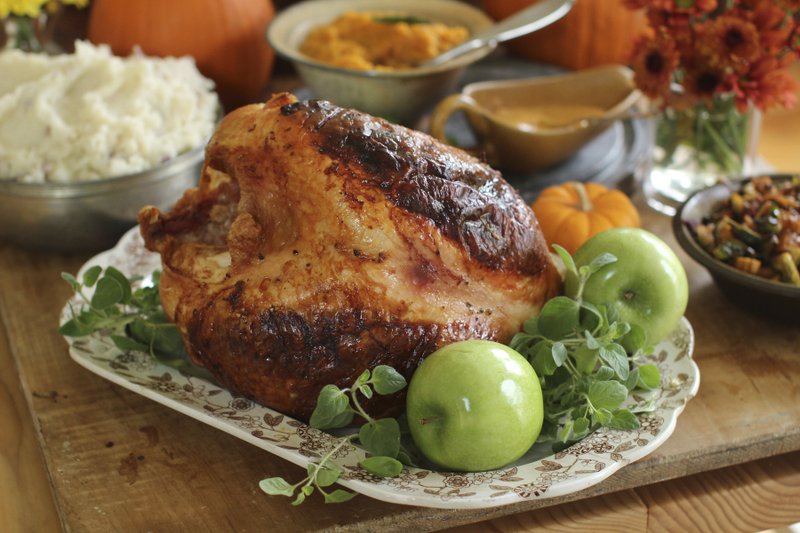



UNDATED—(AVC News)–The Thanksgiving holiday is, to many, synonymous with a home cooked meal.
However, that holiday feast poses a health threat if not prepared or stored correctly.
Health official point out that due to large batch cooking, long prep times and improper raw poultry handling, along with room temperature holiday buffets, the number of food borne illnesses jump around the holidays, especially at Thanksgiving.
Experts say food safety can be broken down into four bask steps: CLEAN, SEPARATE, COOK and CHILL
The USDA offers a number of safety tips as you prepare for your Thanksgiving Day feast.
THE TURKEY
The centerpiece of the traditional Thanksgiving meal is the turkey. Food safety begins when you purchase your bird.
- If buying a fresh turkey, experts suggest it is best to buy it one to two days before cooking. Then, keep it refrigerated until cooking.
- If buying a frozen turkey, store the bird in the freezer. Do not attempt to thaw a frozen turkey ahead of time.
- A safe thawing methods is by moving the turkey from the freezer to the refrigerator ahead of time. About 24 hours for every 4 to 5 pounds in suggested.
- The second approved method of thawing a holiday turkey is in a cool water bath. Submerge the wrapped frozen turkey in cold water, for around 30 minutes per pound, changing that water about every 30 minutes.
Preparing the turkey for the oven, health experts say to never wash your turkey. This potentially splashes dangerous bacteria around your kitchen.
While you should not wash your turkey, experts say to wash your hands frequently with soap and warm water to avoid cross-contamination.
Speaking of cross-contamination, especially when working with ray poultry, be sure that work surfaces and utensils are separated during meal preparation.
Into the oven
Experts say do not rely on color or pop-up timers alone. The turkey, along with any stuffing inside, must reach an internal temperature of 165°F, When inserting a thermometer, check the thickest parts of the breast, thigh or wing while avoiding touching the bone.
For stuffing, many suggest to bake stuffing in a separate dish for safer, more even cooking, and let the turkey rest for 20 minutes before carving.
After the meal
After eating, many tend to retire to another room to digest and socialize, leaving the remaining Thanksgiving meal on the table.
Holiday buffets and leftovers sitting at room temperature is yet another dangerous practice.
Food should never sit out at room temperature for more than two hours of serving, one hour if room temperature is 90 degrees or more.
Leftovers should be placed in shallow containers as to reduce cooling time and placed in the refrigerator as soon as possible to prevent the food from spending too much time at unsafe temperatures of between 40°F and 140° F.
Health experts say Thanksgiving leftovers, if properly stored, should be consumed within 3 to 4 days and should be reheated to at least 165 degrees. Any leftovers expected to be kept beyond the 3 to 4 day limit should be frozen right away.
For more on holiday food safety, two online sources include; https://www.usda.gov/about-usda/news/press-releases/2026/11/13/recipe-safe-thanksgiving
or
https://www.foodsafety.gov/blog/tags/thanksgiving