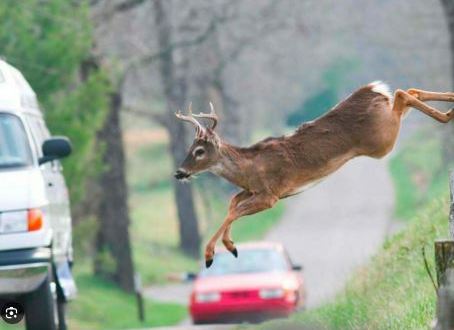


COLUMBUS, Ohio—(AVC News)—With the start of October, the Ohio State Highway Patrol reminds motorists the increased dangers of car-deer crashes increases.
The Patrol points out reports that there are between 18,000 and 20,000 car-deer crashes each year in the Buckeye State.
Of those, nearly half (47%) occur during the months of October, November and December, with November marking the highest single month peak.
According to the State Patrol website, thus far in 2026, there have been 110,676 deer related crashes in Ohio. The most of the crashes have occurred in the northern half of Ohio, with Northeast Ohio showing the highest numbers.
Stark County currently having the highest number of car-deer crashes with 3,425, followed by Richland County in north-central Ohio at 2,930.
In the immediate area: Muskingum County has 1,390 reports, Guernsey 1,152, Noble 145, Belmont 838 and Tuscarawas County 2595.
Statistics show that while 95% of deer-related crashes resulted only in property damage, the remaining crashes did result in human fatalities.
Motorcycle vs deer crashes are even more deadly, as OSHP statistics say motorcycles-deer crashes make up only 1% of the total crashes, but resulted in 81% of the fatal crashes involving deer.
Experts say there are several reasons why car-deer crashes are at their height during these three months. This includes;
-
Mating season. Rut season increases deer movement, and bucks often chase their prospective mates across highways without due caution and many times in large groups.
-
Visibility issues. With the changing of the seasons and ending of Daylight Saving Time, crashes spike due to decreased daylight. The hours of dusk and dawn, 5 to 8 am and 5 to 10 pm are the hours when car-deer crashes most occur.
There are some tips to reduce your chances of a run in with Ohio’s Whitetail Deer.
-
Slow down and be alert especially when traveling near wooded areas, fields and fence rows.
-
Scan to both sides of the roads, watching for movement
-
Use your vehicle’s high beam headlights when possible for best visability
-
If you do see a deer crossing the road, don’t be surprised if the deer turns back from the way it came.
-
Also, if you see one deer, expect more.
If striking a deer is unavoidable, experts suggest the following;
-
Firmly grip the steering wheel and brake firmly.
-
Do not swerve. This could potentially put you in the path of another vehicle.
-
Do not stop on the roadway, but pull to the shoulder and activate your emergency flashers. Be cautious exiting your vehicle and watch for traffic.
-
Avoid making contact with the deer. A wounded animal poses a danger of inflicting injuries.
-
Call 9-1-1 or #677 and your insurance agent as soon as possible.
-
Consider taking photos of the damaged vehicle
Last Updated on October 2, 2026 by AVC News