


COLUMBUS, Ohio (AVC News) — The U.S. Secret Service is warning Americans to remain alert for scams during the 2026 holiday season, when cybercriminals often take advantage of increased shopping, travel and charitable giving.
The agency has released a list of precautions to help consumers protect their personal information and finances, including verifying online retailers, avoiding suspicious payment requests and taking time to evaluate unexpected offers.
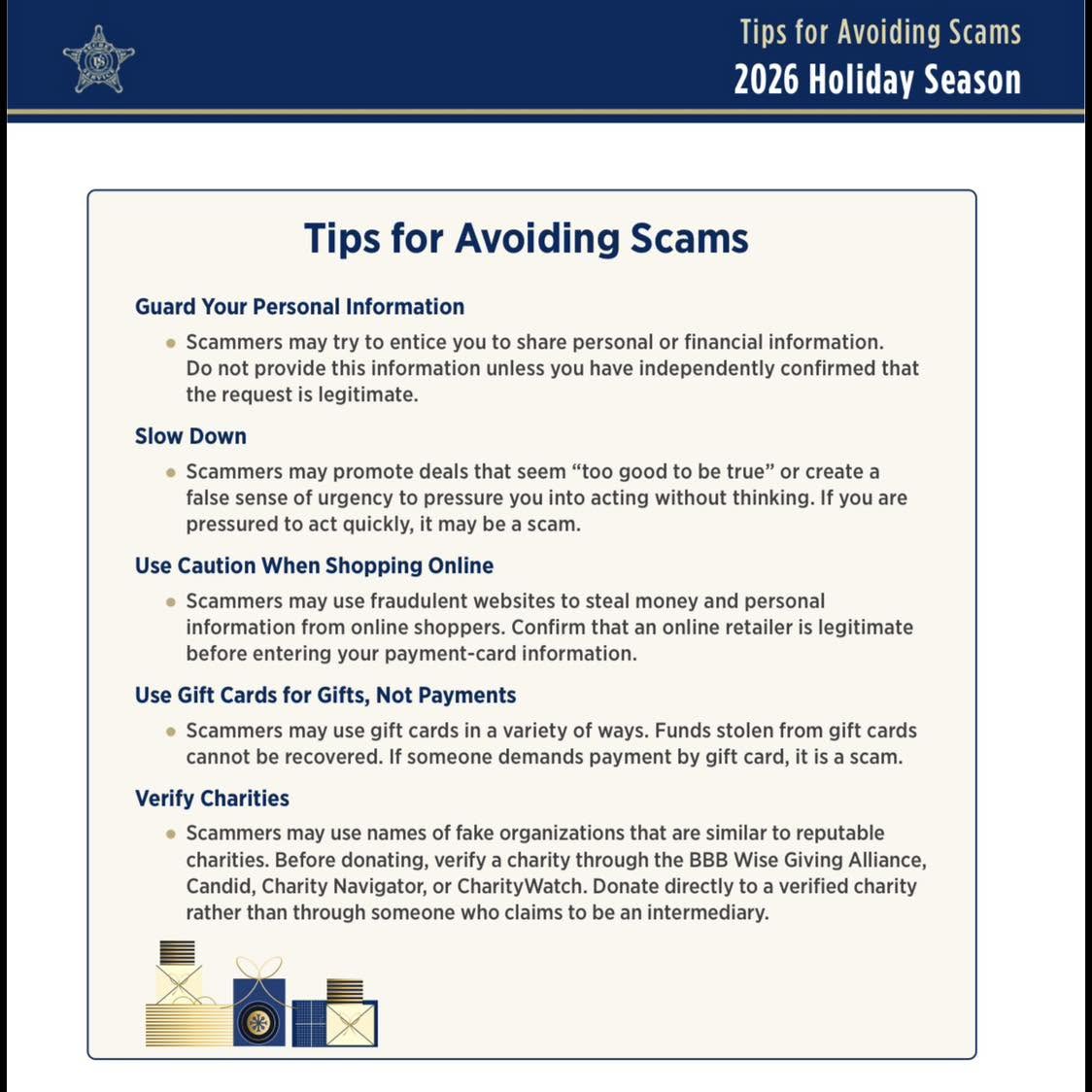
The Secret Service recommends never sharing personal or financial information unless the request has been independently verified. Consumers should also be cautious of deals that seem too good to be true or messages that pressure them to act quickly.
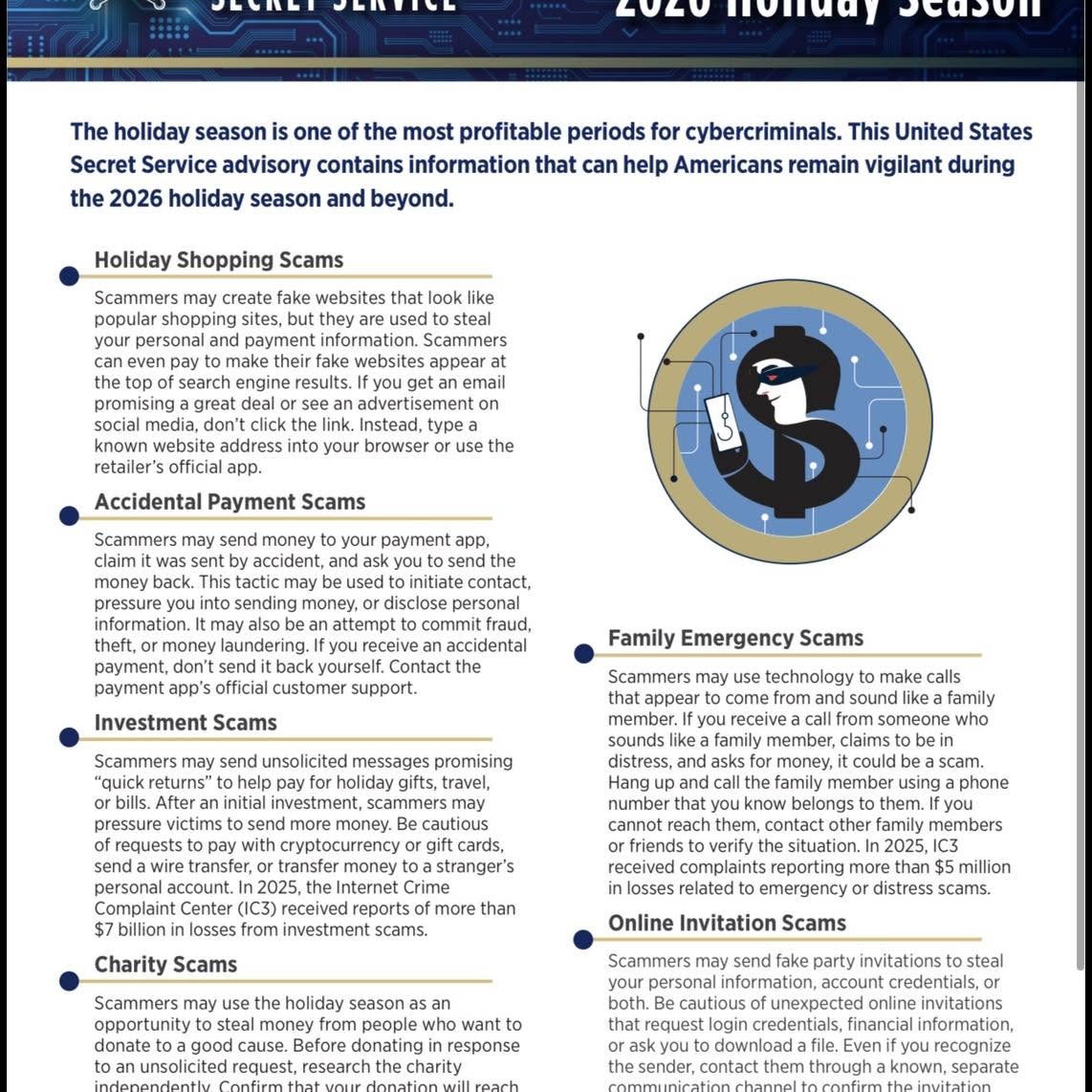
For online shopping, the agency advises consumers to confirm that retailers are legitimate before entering payment information. Rather than clicking links in unsolicited emails or social media advertisements, shoppers should type a known retailer’s website address into their browser or use the retailer’s official app. Fraudulent websites can be designed to resemble legitimate stores and may appear near the top of search results through paid advertising.
The agency also warns against gift card payment requests. Gift cards should be used for gifts, not payments. Once funds are stolen from a gift card, they generally cannot be recovered.
Other scams highlighted in the advisory include:
- Accidental payment scams: A scammer sends money through a payment app, claims it was sent by mistake and asks the recipient to return it. The Secret Service advises against sending the money back directly. Instead, contact the payment service’s official customer support.
- Investment scams: Fraudsters may promise quick returns to help cover holiday expenses, then pressure victims to send additional money. Be cautious of requests involving cryptocurrency, gift cards, wire transfers or payments to a stranger’s personal account. The Internet Crime Complaint Center received reports of more than $7 billion in losses from investment scams in 2025.
- Charity scams: Fake organizations may use names similar to legitimate charities to solicit donations. Consumers should verify organizations through the BBB Wise Giving Alliance, Candid, Charity Navigator or CharityWatch and donate directly to a verified charity.
- Family emergency scams: Criminals may use technology to make phone calls appear to come from and sound like a family member in distress. The agency recommends hanging up and calling the person directly using a known phone number. If they cannot be reached, contact other family members or friends to verify the situation. IC3 received reports of more than $5 million in losses related to emergency or distress scams in 2025.
- Online invitation scams: Fake party invitations may be used to steal account credentials or financial information or to get recipients to download harmful files. Verify unexpected invitations through a separate, trusted communication channel, even if they appear to come from someone you know.
The Secret Service encourages consumers to slow down, independently verify unexpected requests and avoid sending money or personal information under pressure.
The agency said the precautions can help protect Americans throughout the holiday season and beyond.
Last Updated on November 18, 2026 by AVC News