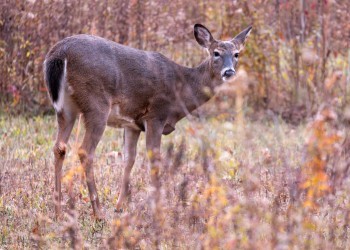



COLUMBUS, Ohio (AVC News) — Deer archery hunting season begins Saturday, Sept. 12, in Ohio’s Chronic Wasting Disease surveillance area, with additional hunting opportunities intended to help reduce deer numbers before the breeding season.
The Ohio Department of Natural Resources Division of Wildlife said early gun hunting will also be permitted in the surveillance area from Oct. 10 through Oct. 12.
For the 2026-27 season, the CWD surveillance area includes all of Allen, Hardin, Marion and Wyandot counties, along with portions of Crawford, Delaware, Hancock, Morrow and Union counties.
CWD is a fatal neurological disease affecting members of the deer family. Since fall 2020, 118 wild deer in Ohio have tested positive for CWD, with detections in Allen, Crawford, Hancock, Hardin, Marion, Seneca and Wyandot counties. The Centers for Disease Control and Prevention says there is no strong evidence that CWD is transmissible to humans.
Hunters in the surveillance area must have a valid hunting license and deer permit unless exempted. Deer management permits and either-sex deer permits become valid in the area Sept. 12. Deer management permits may be used for antlerless deer and are valid on public hunting areas and private land throughout the deer season.
CWD testing is mandatory for all deer harvested in the surveillance area on Oct. 10-11 and Nov. 30-Dec. 1. Staffed sampling locations will be available at the following sites:
- Killdeer Plains Wildlife Area Headquarters, 19100 CH 115, Harpster
- Wyandot County Fairgrounds, 10171 OH 53, Upper Sandusky
- Rural King, 233 American Blvd., Marion
- Hardin County Fairgrounds, 14134 County Road 140, Kenton
- Hog Creek Game Club, 11851 Stemple Road, Ada
- Delaware Wildlife Area Shooting Range, 1110 OH 229, Ashley
- Allen County Sportsmen and Farmers Association, 1001 S. Kemp Road, Lima
Testing is voluntary outside of the four mandatory sampling days. Hunters may also use self-service CWD testing kiosks throughout the deer season.
Hunters in the surveillance area are prohibited from placing or using bait, including salt, minerals or food, to attract or feed deer. Normal agricultural activities, food plots, naturally occurring or cultivated plants and agricultural crops are not prohibited.
The removal of a complete deer carcass or high-risk parts from the surveillance area is also restricted unless the carcass complies with deer carcass regulations or is delivered to a certified taxidermist or processor within 24 hours of leaving the area.
The Division of Wildlife recommends hunters properly dispose of high-risk carcass parts, including the brain, spinal cord, eyes and lymphoid tissue. Additional carcass disposal information and locations are available through the state’s CWD resources.
The Division of Wildlife has conducted routine CWD surveillance since 2002 and has tested more than 58,000 deer.
More information about CWD regulations, testing locations and deer hunting requirements is available through ODNR’s CWD resources.
Last Updated on September 11, 2026 by AVC News